
Introduction — Why This Even Matters
Who knew a barn could be a battleground of light and mood?
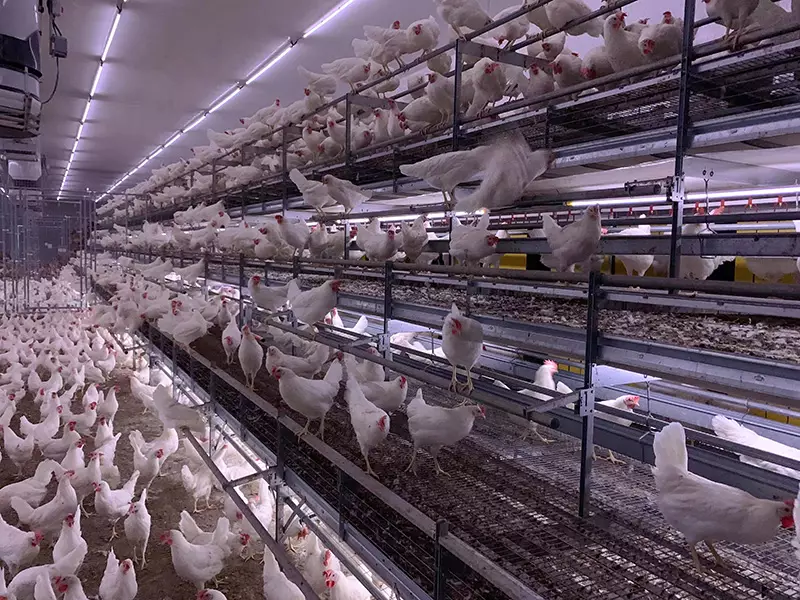
I’ll be candid: when I first walked into a dim poultry shed I felt like I’d stepped into a poorly staged play (cue the flickering bulbs). led barn lights now promise lower bills and steadier light — the sales sheets shout lumens, efficiency and long lifespans — but do those numbers translate to calmer birds and easier chores? Recent farm surveys show many producers still waste 20–30% of LED output through mismatched fixtures or poor dimming controls; I find that maddening and, frankly, avoidable.
Here I want to walk you through the practical choices — with a wink, politely — and move from what sellers claim to what actually works on the floor. Let’s cut through the jargon and get to the kind of answers you’ll use at 5 a.m. when the hens aren’t cooperating.
Part II — Deeper Faults: Why Old Fixes Fail the Poultry Lighting System
Technical first: I’m linking to a resource for quick context — poultry lighting system — because the problem is systemic and often starts with wrong assumptions. Many farms bolt in fixtures and call it done. They ignore the interplay of LED driver characteristics, correlated color temperature (CCT), and dimming curves. That matters. If your LED driver is not matched to the fixture, you get flicker or early failure. If the CCT is wrong, bird behavior shifts—less feed intake, more agitation. I’ve seen a dozen installs where a cheap power converter wrecked what otherwise would have been a tidy, efficient system. Look, it’s simpler than you think: match drivers, mind lumens, and choose proper CCT — that’s the baseline.
What exactly goes wrong?
Here’s the direct list from field experience: poor lumen distribution causes dark corners where pests hide; inadequate dimming leads to stress during transitions; and incompatible control protocols mean you can’t integrate with timers or sensors. These are not academic faults — they show up as uneven egg production or higher mortality. I’ve worked with techs who patched systems with off-the-shelf ballasts — a temporary fix that often backfires. Also, edge computing nodes and sensor integration are neglected variables; without them you lose actionable feedback about light levels and bird response. — funny how that works, right?
Part III — Principles, Prospects, and Practical Picks
What’s Next for Lighting and the Flock?

Moving forward, I prefer to frame this as a set of clear principles rather than a parade of gadgets. First: adaptive control. A modern poultry lighting system should support smart dimming programs tied to circadian cues, not just on/off timers. Second: sensor feedback loops — light sensors and motion detectors feed simple algorithms that adjust output to maintain target lux levels without wasting watts. Third: modular fixtures with standardized connectors make maintenance painless. These are engineering ideas but they’re practical; I’ve seen farms cut energy use and see steadier production when they adopt them.
Now the short, useful takeaways I give to colleagues when they ask me for advice — three metrics I check before signing off on an upgrade: 1) Effective lumens per square meter at bird level (not spec-sheet lumen output), 2) compatibility of LED driver and power converters with your control protocol, and 3) measured flicker index under dimming (aim low). Measure these, and you’ll avoid most common mistakes. I’ll admit I’ve been surprised by how many vendors skip a field demo; don’t. Try it in a small zone first — you’ll learn more than any brochure can teach. — and you’ll save money that way.
To wrap up: I’ve walked from the polite claims of marketing to the blunt reality on the floor, and I stand by the practical path: match components, adopt smart controls, and verify with sensors. If you want a partner who understands both the hardware and the henhouse, consider checking out szAMB. I’m glad we had this talk — and I’ll be at the next early-morning install if you need me.