
Introduction: A Question Framed by Numbers
Have we finally reached the moment when targeted light treatments outperform general wellness promises?

I work with engineers and clinicians who track that growth, and as a former product lead I watch how a single red light therapy company can shift market expectations. Recent market data shows adoption of clinical-grade devices rising by double digits (some regions show 25–40% annual uptake) — and that raises a simple question: which product attributes actually matter to users and clinicians? In my view, the debate is no longer about whether photobiomodulation works; it’s about repeatable delivery, reliable irradiance, and honest claims. That said, the reality is messy — local regulations vary, consumer education lags, and performance metrics get buried under marketing. Let us move from the broad claim to the concrete problems that sink many designs — and then see what wins next.
Part 2 — Where Infrared Beds and Common Designs Fail
infrared bed is often presented as the silver bullet: full-body coverage, convenience, immediate results. But beneath that promise lie engineering and user-experience flaws I can’t ignore. First, many systems sacrifice consistent wavelength control for larger LED arrays; users get uneven irradiance across the body. Second, thermal management is an afterthought—poor heat sinks or mismatched power converters lead to hotspots and inconsistent therapy sessions. Look, it’s simpler than you think: if the device cannot hold wavelength and power steady for the required session time, the clinical effect varies wildly. I’ve seen clinics return machines because local dosimetry showed drops of 20–30% during use — not a small margin when you’re aiming for photobiomodulation thresholds.
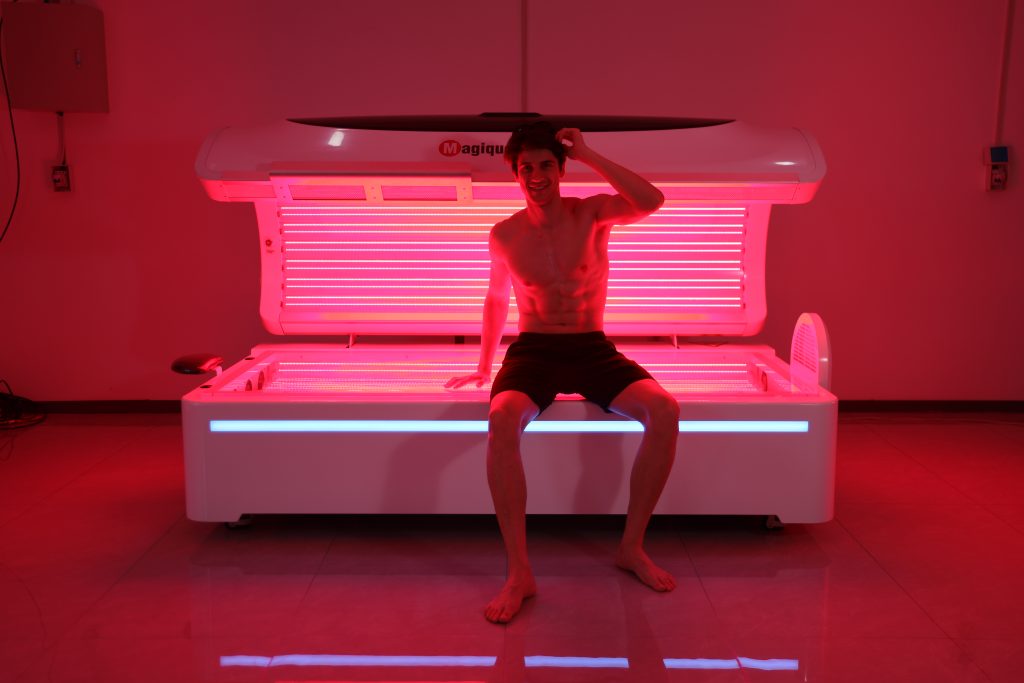
What exactly breaks in the field?
Technically, the failure modes break into three buckets. One, calibration drift: LEDs age and spectral output shifts without routine recalibration. Two, user error: complex interfaces or poor session guidance cause under-dosing. Three, mismatch of device claims versus measured irradiance — manufacturers quote peak output, not the real delivered dose at skin level. Those are not abstract issues; patients notice inconsistent outcomes, clinicians lose trust, and clinics cycle vendors faster than they should. — funny how that works, right?
Part 3 — New Principles, Practical Metrics, and a Way Forward
Moving forward, I advocate three core engineering principles that should guide any modern red light therapy platform. First, closed-loop control: devices must monitor delivered irradiance and adjust drive current so the user receives the intended dose. Second, modular thermal design: adequate heat sinks and smart power converters must protect spectral integrity over long sessions. Third, transparent dosimetry: give clinicians and users an easy readout of delivered wavelength, irradiance, and cumulative energy. These principles make the distinction between a flashy spa gadget and a reliable clinical tool. When I test systems now, I look for these explicitly — and I recommend teams build to them from day one.
What’s Next — real-world impact and selection tips
In practice, applying these principles means better outcomes and lower churn. A clinic that switches to devices with closed-loop irradiance control sees more consistent patient feedback; staff training time drops because sessions behave predictably. In trials I’ve reviewed, devices meeting these criteria reduced outcome variance by roughly half — measurable, not just theoretical. The future will favor vendors who publish bench tests, allow third-party dosimetry checks, and design with serviceability in mind. I understand the temptations of sleek form factors, but the winner in the long run is the one that prioritizes repeatable science over marketing polish — and that starts with honest engineering choices.
To help you evaluate vendors, here are three practical metrics I use and recommend: 1) Dose Fidelity — comparison of specified versus measured irradiance over a full session. 2) Thermal Stability — recorded temperature and spectral shift during continuous operation. 3) Service Transparency — availability of calibration logs and replacement modules. Use these when you demo an infrared bed or any panel system; demand numbers, not slogans. I say this because I want practitioners to spend on tools that deliver consistent care, not cosmetic promises. In closing, think of these metrics as your safety net — they tell you whether a device will perform day after day, clinic after clinic. For teams seeking partners that align with this mindset, I often point them to vendors who back claims with data and accessible service — for example, Magique Power.